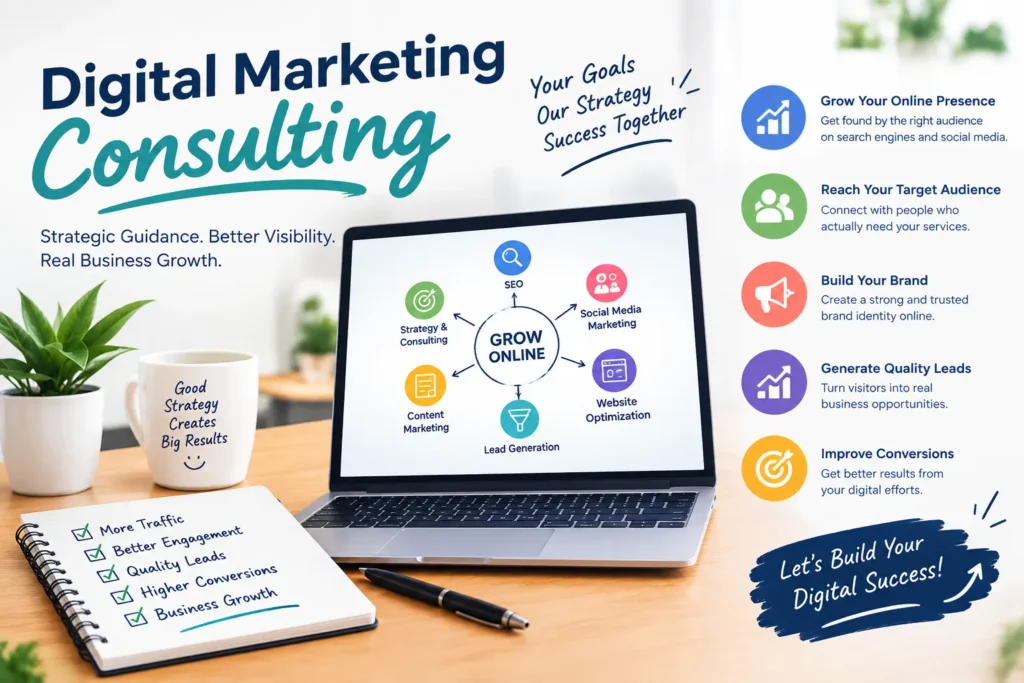
Content Marketing Consultant: Create Valuable Content That Grows Your Business Grow Your Business with a Professional Content Marketing Consultant
Are you looking for a reliable Content Marketing Consultant who can help your business attract the right audience, improve online visibility, and generate quality leads? In today’s competitive digital world, simply publishing content is not enough. Your business needs a clear content strategy, valuable information, search engine optimization, and consistent communication to reach potential customers.
As a digital marketing consultant, I understand that every business has different goals, challenges, and audiences. Some businesses want to increase website traffic, while others want to generate leads, improve brand awareness, or increase sales. The right content marketing strategy helps connect these objectives with the needs of your target customers.
Content marketing is more than writing blogs or posting on social media. It is about creating useful, relevant, and engaging information that answers customer questions, solves problems, builds trust, and encourages people to take action.
My approach focuses on creating content that serves both your audience and your business objectives. From SEO-friendly website content and blog writing to content planning and lead-generation strategies, I help businesses develop a stronger digital presence through purposeful content.
Whether you are a startup, small business owner, educational institute, service provider, or growing company, strategic content marketing can help you communicate your value and build meaningful relationships with potential customers.
Ready to make your content work for your business? Let’s develop a content marketing strategy that supports your growth.
What Is a Content Marketing Consultant?
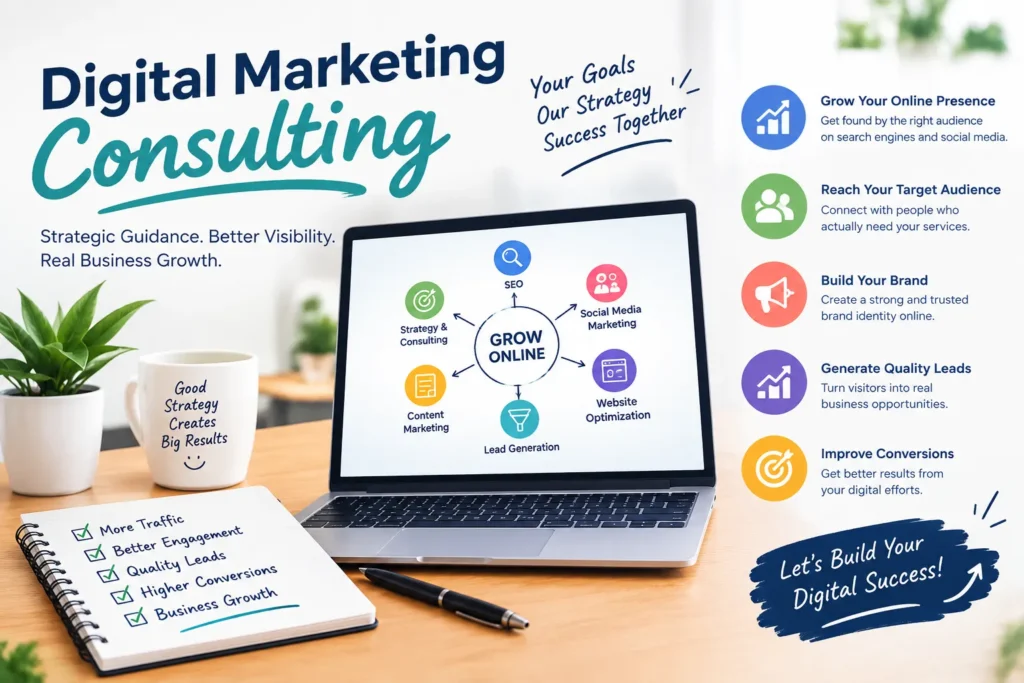
A content marketing consultant is a professional who helps businesses plan, create, optimize, distribute, and evaluate content to achieve specific marketing goals.
Instead of publishing random content without a clear direction, a content marketing consultant develops a strategy based on your target audience, industry, competitors, business objectives, and customer journey.
For example, imagine you own a digital marketing training institute. Your potential customers may search for information about digital marketing courses, course fees, career opportunities, practical training, and job prospects. A content marketing consultant can help you create useful pages, informative blogs, FAQs, and social media content that answer these questions.
Similarly, an e-commerce business may need product descriptions, buying guides, category pages, and educational articles that help customers make purchasing decisions.
A content marketing consultant typically helps with:
- Developing a content marketing strategy.
- Researching target audiences and search intent.
- Planning SEO-friendly website content.
- Creating blog topics and editorial calendars.
- Improving existing website pages.
- Developing content for lead generation.
- Identifying relevant keywords and content opportunities.
- Planning content distribution across suitable platforms.
- Measuring content performance and identifying improvements.
The primary objective is to ensure that every piece of content has a purpose, reaches the appropriate audience, and contributes to your business goals.
Why Does Your Business Need a Content Marketing Consultant?
Every day, potential customers search online for products, services, solutions, and professional advice. If your website does not provide the information they need, they may choose a competitor who communicates more clearly.
A content marketing consultant helps you build a structured approach to reaching these customers.
1. Improve Your Website Visibility
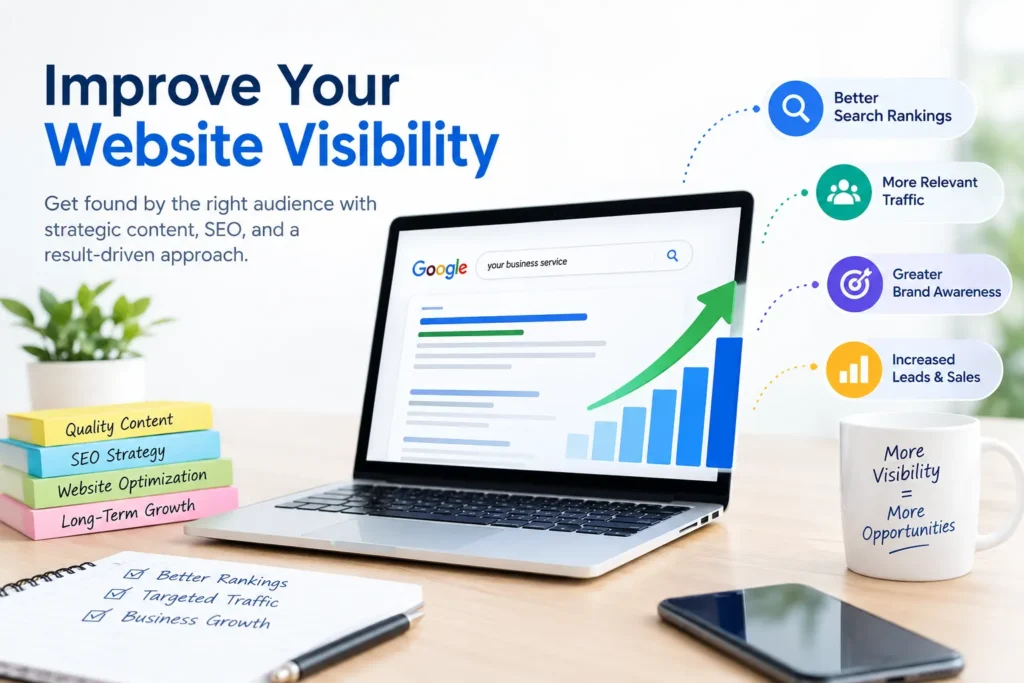
Search engines help people discover businesses when they look for relevant products, services, and information. High-quality, useful content can create opportunities for your website to appear for relevant search queries.
A content marketing consultant researches the topics your audience cares about and develops content around relevant search intent.
For example, a consultant working with a small business might target topics such as “how content marketing helps small businesses,” “SEO content writing services,” or “how to generate leads through content marketing.”
The goal is to create pages that answer users’ questions accurately and make it easier for them to understand your services.
2. Attract the Right Audience
Website traffic alone does not guarantee business growth. You need visitors who are genuinely interested in your products or services.
Content marketing helps attract people who are already searching for information related to your business.
Informational blogs can introduce your brand to new audiences. Service pages can explain what you offer. Comparison articles and case studies can help people evaluate their options before making a decision.
By understanding your audience’s needs, I can help you develop content that attracts relevant visitors rather than focusing only on increasing traffic numbers.
3. Build Trust and Brand Authority
Customers are more likely to consider a business when they understand its expertise, services, and approach.
Helpful articles, detailed service pages, transparent business information, and genuine customer experiences can help establish credibility.
For example, publishing a practical guide that answers common customer questions demonstrates that your business understands its industry.
However, trust should be built through accurate information, real experience, and useful advice—not exaggerated promises or unsupported claims.
4. Generate Quality Leads
Content can help turn website visitors into potential customers.
A well-structured service page explains the problem, presents your solution, highlights the benefits, and gives visitors a clear next step.
That next step could be requesting a consultation, filling out a contact form, calling your business, or sending an inquiry.
A content marketing consultant can identify opportunities to improve calls to action, strengthen service descriptions, and create useful resources that encourage relevant prospects to contact you.
5. Support Long-Term Business Growth
Paid advertisements can help businesses reach audiences quickly, but their visibility usually depends on continued advertising investment.
Useful website content can continue attracting visitors after publication, although performance depends on competition, search demand, content quality, and ongoing maintenance.
A consistent content marketing strategy helps businesses develop a valuable online resource over time.
My Content Marketing Consulting Services
Every business requires a different content strategy. My content marketing consulting services focus on understanding your goals and identifying the content opportunities most relevant to your audience.
1. Content Marketing Strategy
A successful content marketing campaign begins with a clear plan.
I help businesses identify their target audience, understand their content requirements, establish priorities, and organize content around specific objectives.
The strategy may include audience research, topic selection, keyword opportunities, content formats, publishing frequency, distribution channels, and performance indicators.
Rather than publishing content without direction, you can follow a structured plan that connects your content activities with your business goals.
A content marketing strategy can include:
- Business and audience analysis.
- Competitor content research.
- Content gap identification.
- Keyword and topic planning.
- Content calendar development.
- Content distribution planning.
- Performance measurement recommendations.
2. SEO Content Writing
SEO-friendly content helps search engines and users understand what your page is about.
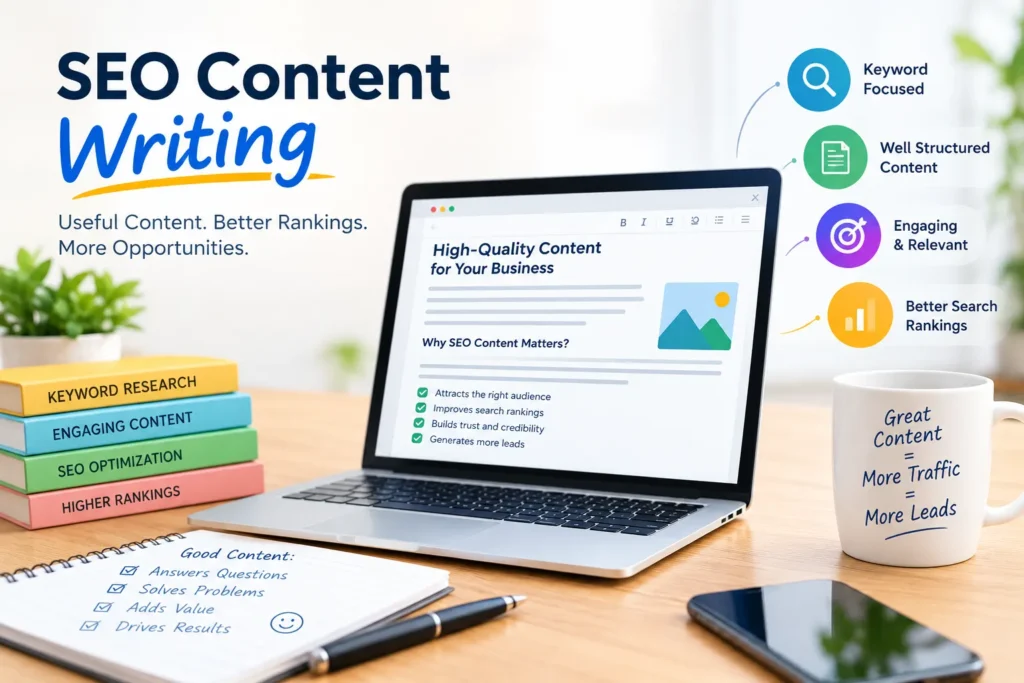
My SEO content writing approach focuses on creating clear, helpful, and well-organized content that addresses the user’s search intent.
This may include homepage content, service pages, landing pages, educational articles, and other website content.
The process involves understanding the target keyword, identifying related questions, organizing headings logically, explaining your services clearly, and including relevant internal links where appropriate.
Keywords should appear naturally in the content. Repeating the same phrase excessively can make a page difficult to read and does not guarantee better rankings.
The ultimate goal is to create content that answers the visitor’s question and helps them make an informed decision.
3. Website Content Optimization
Your existing website may already contain useful information, but some pages may need better structure, clarity, relevance, or conversion-focused messaging.
Website content optimization involves reviewing existing pages and identifying opportunities to improve them.
I can help you assess:
- Page headings and content structure.
- Search intent and keyword relevance.
- Content readability and clarity.
- Missing information and unanswered questions.
- Internal linking opportunities.
- Calls to action and contact information.
- Outdated or repetitive content.
- Alignment between page content and business services.
For example, a service page that only lists features may not fully explain why customers should choose that service. Improving the page with benefits, process details, relevant examples, and clear next steps can create a better user experience.
4. Blog Content Planning and Writing
Blogging is an effective way to answer customer questions, explain industry topics, and introduce people to your business.
However, a successful blog strategy requires more than publishing articles regularly. Topics should reflect what your audience wants to learn and how those topics connect to your services.
I help identify blog opportunities that can support your website’s broader content strategy.
For a digital marketing consultant, suitable topics may include:
- What Is Content Marketing and Why Does It Matter?
- How SEO Content Helps Businesses Grow.
- Content Marketing Strategies for Small Businesses.
- How to Create Content That Generates Leads.
- Common Content Marketing Mistakes to Avoid.
- How to Build a Monthly Content Calendar.
- How to Measure Content Marketing Performance.
- How to Improve Website Content for Conversions.
Each article should provide genuine value and offer a relevant next step when appropriate.
5. Keyword Research and Topic Clustering
Keyword research helps identify the words and questions people use when searching online.
A strong content strategy considers search intent, competition, relevance, and the potential business value of a topic rather than choosing keywords only because they appear popular.
I can help organize relevant keywords into topic groups and map them to appropriate website pages.
For example, the main topic “content marketing consultant” may connect to supporting topics such as content marketing strategy, SEO content writing, blog content planning, website content optimization, and lead-generation content.
Each topic should have a clear purpose. Closely related keywords can often be addressed on one comprehensive page rather than creating multiple pages with nearly identical information.
This approach helps establish a logical website structure and reduces unnecessary content duplication.
6. Social Media Content Strategy
Social media can help businesses distribute content, communicate with audiences, and maintain brand visibility.
A social media content strategy identifies the topics, formats, and messages that are most appropriate for your audience and platform.
Content formats may include educational posts, short videos, carousels, industry tips, frequently asked questions, customer stories, and promotional posts.
For example, a blog about SEO content writing can be repurposed into an Instagram carousel explaining five content optimization tips.
A longer educational article can also inspire short-form videos, LinkedIn posts, or an email newsletter.
The purpose is to distribute useful information consistently while maintaining a recognizable brand voice.
7. Landing Page Content
Landing pages are designed to encourage visitors to complete a specific action, such as submitting an inquiry, registering for a course, or requesting a consultation.
Effective landing page content clearly communicates the offer, explains its benefits, addresses common concerns, and provides a visible call to action.
I focus on making landing page messaging relevant to the audience and consistent with the advertisement, search query, or campaign that brings visitors to the page.
A well-planned landing page may include a strong headline, service benefits, an explanation of the process, frequently asked questions, trust signals, and an inquiry form.
The objective is to help visitors understand the offer and make their next step easier.
8. Lead-Generation Content
Lead-generation content helps attract people who may be interested in your services.
Depending on your business, this content could include practical guides, checklists, educational resources, comparison articles, webinars, consultation pages, or industry-specific FAQs.
For example, a digital marketing consultant could offer a website content checklist to help business owners identify missing information on their service pages.
A potential customer who finds the resource useful may then explore the consultant’s services.
Effective lead-generation content should offer genuine value and make the next step relevant rather than pressuring visitors into unnecessary actions.
9. Content Audit and Gap Analysis
A content audit evaluates the content already published on your website.
It helps identify which pages are useful, which require improvement, where information is missing, and whether different pages serve distinct purposes.
A content gap analysis can also compare your website’s topic coverage with the questions and needs of your target audience.
The resulting recommendations may include updating older pages, improving weak service descriptions, merging overlapping articles, adding missing FAQs, or developing new resources.
Not every page needs to be rewritten. The best approach is to prioritize changes based on their relevance, quality, and potential business impact.
10. Content Performance Analysis
Content marketing should be evaluated using meaningful performance indicators.
Depending on your goals, useful metrics may include organic search clicks, impressions, relevant website visits, engagement, inquiry submissions, conversion rate, and leads generated through content.
Google Search Console can help monitor search visibility and clicks, while analytics tools can provide information about website engagement and conversions when configured correctly.
I use a goal-focused approach to identify what is working, what needs improvement, and which content opportunities deserve further attention.
Results vary by industry, competition, website authority, and execution. Content marketing should therefore be treated as an ongoing process of testing, learning, and improvement.
My Content Marketing Process
A clear process helps ensure that your content supports your business goals and provides value to your audience.
Step 1: Understand Your Business
The first step is to understand your services, products, target customers, competitors, and business objectives.
I identify what makes your business different and what information potential customers need before choosing a provider.
Step 2: Research Your Audience
Audience research helps uncover customer questions, challenges, motivations, and decision-making factors.
This information guides content topics, messaging, tone, and the level of detail required on each page.
Step 3: Analyze Keywords and Search Intent
I identify relevant keyword opportunities and assess what users expect to find when they search for them.
For example, someone searching for “what is content marketing” probably wants an explanation, while someone searching for “content marketing consultant services” may be comparing providers.
Understanding this difference helps determine the right content format.
Step 4: Develop a Content Plan
Based on the research, I organize topics into a practical content plan.
The plan can specify target pages, primary topics, supporting questions, content formats, publishing priorities, and calls to action.
Step 5: Create Helpful Content
Content should be accurate, easy to understand, relevant, and organized around the reader’s needs.
I focus on clear explanations, descriptive headings, useful examples, natural keyword usage, and content that reflects the purpose of each page.
Step 6: Optimize and Publish
Before publication, content should be reviewed for readability, page structure, keyword relevance, internal links, metadata, and mobile usability.
Images should have appropriate alternative text when they communicate meaningful information.
Publishing is only one part of the process; pages may need further improvements as customer needs and search results change.
Step 7: Measure and Improve
After publishing, performance can be reviewed using relevant data.
Pages that attract visitors but generate few inquiries may need clearer service information or better calls to action. Pages with low search visibility may need further investigation into relevance, competition, indexing, or content quality.
This continuous improvement process helps make content marketing more focused and accountable.
Content Marketing for Small Businesses
Small businesses often have limited time, budgets, and marketing resources. This makes a focused content strategy especially valuable.
You do not need to publish hundreds of articles to begin building a useful content library. Instead, prioritize the pages and topics that answer important customer questions and explain your services.
For example, a local service business could start with a clear homepage, detailed service pages, location-specific information where appropriate, and a small collection of useful blog articles.
An education institute could publish course details, eligibility requirements, course duration, fees where confirmed, learning outcomes, and answers to common student questions.
An e-commerce business could focus on informative product descriptions, category content, product comparisons, and buying guides.
A content marketing consultant can help you prioritize these opportunities so that your available resources are directed toward the most relevant activities.
Start with a clear message, understand your customers, and improve your content consistently. Small, thoughtful improvements can create a stronger foundation for long-term marketing growth.
Content Marketing for Different Industries
Education and Training Institutes
Educational businesses need content that helps students and parents understand courses, eligibility, fees, learning outcomes, career options, and admission procedures.
Course pages, educational blogs, comparison guides, and FAQs can help answer these questions.
The information should be accurate and transparent, especially when discussing placements, certifications, salaries, or career outcomes.
E-Commerce Businesses
E-commerce content helps customers understand products, compare options, and make confident purchasing decisions.
Useful formats include product descriptions, category pages, buying guides, product FAQs, and comparison articles.
The content should explain genuine product features and benefits without making unsupported claims.
Professional Service Providers
Consultants, accountants, marketing agencies, and other service providers need content that communicates expertise and explains how their services solve customer problems.
Detailed service pages, educational blogs, process explanations, case studies, and FAQs can help potential customers evaluate their options.
Startups and Growing Companies
Startups need to communicate what they offer, who they serve, and why their solution matters.
A content strategy can help clarify brand messaging, explain products, educate potential customers, and support growth campaigns.
The content should evolve as the business learns more about its audience and market.
Content Marketing and SEO: How Do They Work Together?
Content marketing and search engine optimization support each other, but they are not identical.
Content marketing focuses on planning and distributing valuable information to attract and engage an audience. SEO focuses on improving a website’s visibility and accessibility in relevant organic search results.
When these activities work together, your content can become easier for people to discover and more useful once they reach your website.
A coordinated approach may include:
- Researching relevant keywords and search intent.
- Creating helpful content that directly answers user questions.
- Using clear page titles and descriptive headings.
- Organizing pages with logical internal links.
- Improving page experience and mobile usability.
- Providing accurate author, business, and contact information.
- Updating content when important information becomes outdated.
- Monitoring search performance and user engagement.
SEO does not guarantee first-page rankings, and publishing more content does not automatically improve visibility. Quality, relevance, competition, technical accessibility, and many other factors influence performance.
The goal is to create content that deserves attention because it genuinely helps the people you want to reach.
How Can Content Marketing Help You Generate More Leads?
Content can support each stage of a customer’s decision-making journey.
At the awareness stage, educational articles help people understand a problem. During the consideration stage, detailed service pages, comparison guides, and practical examples help them evaluate solutions. At the decision stage, transparent service information, testimonials that reflect genuine experiences, and clear contact options help people take the next step.
For example, a business owner might first discover an article about content marketing challenges. After learning about possible solutions, the visitor explores your consulting services and submits an inquiry.
To support this journey, your website should include relevant calls to action, easy-to-find contact details, clear service descriptions, and a straightforward inquiry process.
Content can support lead generation, but results depend on the relevance of the audience, the quality of the offer, the website experience, and the effectiveness of follow-up.
Why Choose My Content Marketing Consulting Services?
Choosing the right content marketing consultant means finding someone who understands that content should serve a business purpose.
My approach emphasizes clarity, audience relevance, practical planning, and continuous improvement.
A Strategy Based on Your Goals
Your content plan should reflect your business objectives rather than follow a generic template. I focus on identifying opportunities relevant to your services, audience, and current marketing priorities.
Audience-Focused Communication
Good content speaks to the reader’s questions and concerns. I aim to make complex topics easier to understand and explain services in a way that helps potential customers make informed decisions.
SEO-Friendly Content Structure
I consider keyword relevance, search intent, headings, internal linking, and readability to help organize content effectively.
Focus on Business Outcomes
Website traffic matters, but it is not the only measure of success. Content should also help visitors understand your services, build confidence, and take meaningful actions.
Continuous Improvement
Content marketing requires regular evaluation. I help identify opportunities to improve existing pages, expand useful topics, and refine the strategy based on available performance data.
Flexible Solutions
Different businesses have different needs. Whether you require a content strategy, blog planning, service-page optimization, or lead-generation content, the work should be aligned with your priorities and available resources.
My aim is to help you build a practical content marketing foundation that supports your wider digital marketing activities.
Content Marketing Mistakes Your Business Should Avoid
Even well-intentioned content marketing efforts can underperform when important details are overlooked.
1. Publishing Without a Strategy: Random topics can create a disconnected website. Establish clear objectives and audience priorities before publishing.
2. Focusing Only on Keywords: Keywords help describe search demand, but content must answer the reader’s question. Avoid unnatural repetition and keyword stuffing.
3. Ignoring Search Intent: A visitor seeking a definition needs a different answer from someone ready to hire a consultant. Match the content format to the user’s needs.
4. Creating Duplicate Content: Publishing several pages with nearly identical information can confuse visitors and weaken your overall content structure. Give each page a distinct purpose.
5. Forgetting Calls to Action: Helpful content should also guide interested visitors toward an appropriate next step, such as reading a related article or contacting your business.
6. Neglecting Existing Pages: Updating outdated information and improving useful pages may be more valuable than continually publishing new articles.
7. Expecting Instant Results: Organic visibility and customer trust take time to develop. Set realistic expectations and review performance regularly.
8. Ignoring Content Accuracy: Incorrect information and unsupported promises can damage trust. Check facts, verify business claims, and update important details when necessary.
Avoiding these mistakes helps create a more organized, useful, and sustainable content marketing approach.
Frequently Asked Questions About Content Marketing Consultants
1. What does a content marketing consultant do?
A content marketing consultant helps businesses plan, create, optimize, distribute, and evaluate content. The work may include content strategy, SEO content planning, blog development, website content optimization, and lead-generation recommendations.
2. Why should I hire a content marketing consultant?
You may benefit from a consultant if you need a clear content strategy, want to improve website content, need help identifying relevant topics, or want your content to support business goals such as lead generation and brand awareness.
3. How much does a content marketing consultant charge?
The cost depends on the scope of work, project complexity, industry, deliverables, and level of ongoing support. Some consultants charge per project, while others offer monthly consulting packages. Contact me to discuss your requirements and request a suitable proposal.
4. How long does content marketing take to show results?
The timeline varies according to competition, website history, content quality, distribution, and marketing objectives. Some content may generate engagement quickly, while organic search growth can take several months or longer. There is no guaranteed timeline for rankings or leads.
5. What is the difference between content marketing and SEO?
Content marketing focuses on creating and distributing useful information to attract and engage an audience. SEO focuses on improving organic search visibility. Both can work together to help people discover and benefit from your content.
6. Can content marketing help small businesses?
Yes. Content marketing can help small businesses answer customer questions, explain their services, build trust, improve online visibility, and create opportunities for inquiries. A focused strategy can help make the best use of limited marketing resources.
7. What types of content can a consultant help with?
Depending on the service agreement, a consultant can help with website pages, blog articles, landing pages, FAQs, content calendars, social media content plans, educational resources, and content optimization recommendations.
8. Is content marketing useful for lead generation?
Yes. Helpful content can attract relevant audiences, explain your services, address customer concerns, and guide interested visitors toward contact forms or consultations. Actual results depend on the quality of the content and the overall customer journey.
9. Do I need SEO for content marketing?
SEO is valuable when you want people to discover your content through organic search. However, content can also reach audiences through social media, email newsletters, referrals, and other distribution channels. The right combination depends on your goals.
10. How often should I publish new content?
There is no single publishing frequency that works for every business. Choose a schedule that allows you to maintain accuracy, quality, and relevance. Publishing one useful article is often more valuable than producing several weak articles simply to meet a quota.
11. Can you optimize my existing website content?
Yes, content optimization can include reviewing page structure, search intent, keyword relevance, readability, internal links, missing information, and calls to action. The specific work depends on the website and its current needs.
12. How do you measure content marketing success?
Success can be measured through indicators such as organic clicks, search impressions, relevant website visits, engagement, inquiry submissions, and conversions. The appropriate metrics depend on the business objectives established at the beginning.
Let’s Build a Content Marketing Strategy for Your Business
Your content should do more than fill pages on your website. It should help your audience understand their challenges, discover useful solutions, and learn why your business may be the right choice.
With a thoughtful content marketing strategy, you can create a more consistent brand message, improve your website experience, support organic search visibility, and develop meaningful opportunities to connect with potential customers.
Whether you need SEO-friendly website content, a blog strategy, content optimization, or a lead-generation plan, the first step is understanding your business and your audience.
I believe effective digital marketing begins with useful information, clear communication, and a willingness to improve.
Let’s discuss your content marketing goals and identify the right next steps for your business.
Contact me today to explore content marketing consulting solutions tailored to your needs.
Ready to grow with better content? Get in touch today!