

In today’s digital world, having a strong online presence is important for every business. But simply creating a website is not enough. Your website needs to appear in search results when potential customers search for your products or services.
This is where SEO (Search Engine Optimization) comes into play.
To build a successful career in SEO, you need more than just theoretical knowledge. You need practical SEO skills such as keyword research, content optimization, technical SEO, link building, competitor analysis, and performance tracking.
Whether you are a beginner, digital marketer, business owner, or aspiring SEO professional, learning these skills can help you improve website visibility and grow organic traffic.
What Are SEO Skills?
SEO skills are the knowledge and practical abilities required to optimize a website for search engines and users.
An SEO professional uses different techniques to help search engines understand a website and improve its visibility for relevant searches.
Some important SEO skills include:
- Keyword research
- On-page SEO
- Technical SEO
- Content optimization
- Off-page SEO
- Link building
- Competitor analysis
- SEO analytics
- Local SEO
- Mobile SEO
- Image optimization
- SEO reporting
Read Also: Digital Marketing Agency: How It Helps Businesses Grow Online in 2026
Why Are SEO Skills Important?
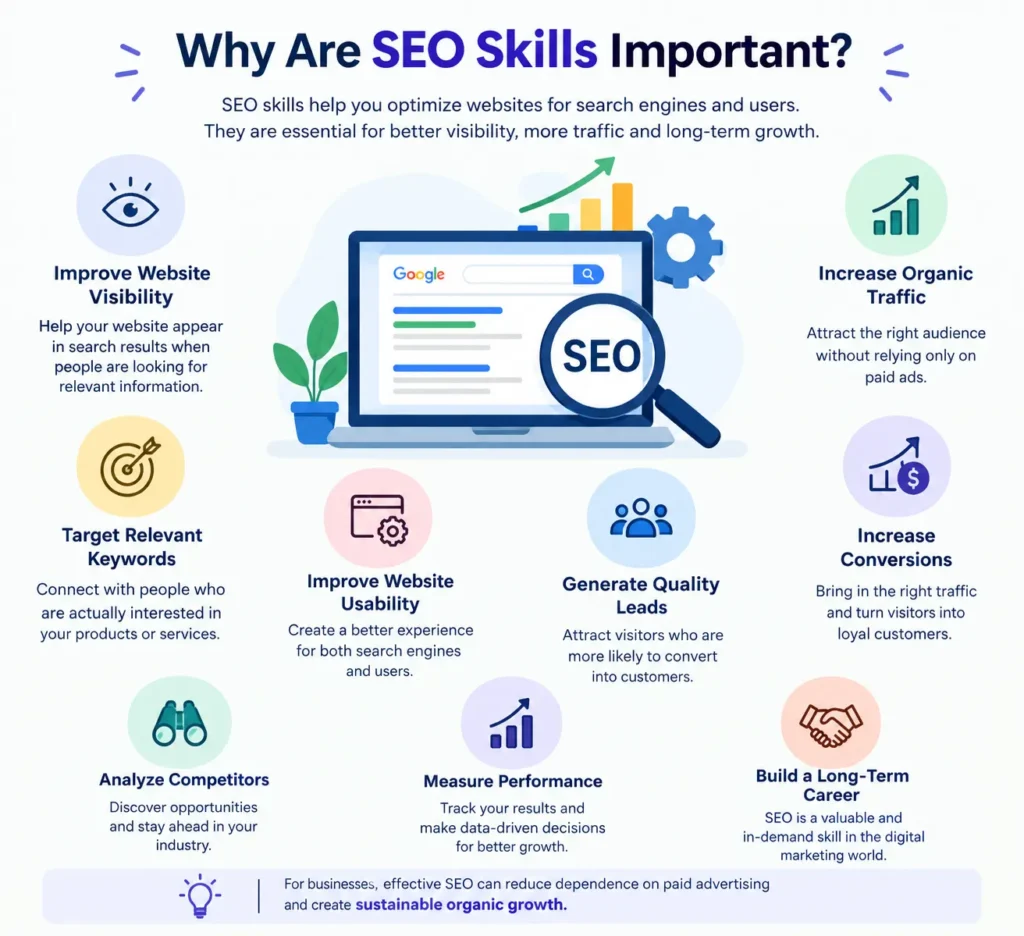
SEO is an important part of digital marketing because organic search can help businesses attract people who are actively looking for their products, services, or information.
Strong SEO skills can help you:
- Improve website visibility
- Increase organic traffic
- Target relevant keywords
- Improve website usability
- Generate quality leads
- Increase conversions
- Analyze competitors
- Measure SEO performance
- Build a long-term digital marketing career
For businesses, effective SEO can reduce dependence on paid advertising and create sustainable organic growth.
10 Essential SEO Skills You Should Learn
1. Keyword Research
Keyword research is one of the most important SEO skills.
It involves finding the words and phrases people use when searching on Google and other search engines.
For example, if someone wants to learn digital marketing, they might search for:
- Digital marketing course
- Digital marketing course in Delhi
- Best digital marketing course
- Digital marketing course fees
An SEO professional needs to understand search intent, keyword relevance, competition, and search demand before selecting keywords.
2. On-Page SEO
On-page SEO focuses on optimizing elements that exist on a webpage.
Important on-page SEO elements include:
- Title tag
- Meta description
- Headings
- URL structure
- Keyword placement
- Content quality
- Internal linking
- Image alt text
- Content readability
Good on-page SEO helps search engines understand what a page is about while also making the page useful for visitors.
3. Technical SEO
Technical SEO focuses on the technical aspects of a website that can affect crawling, indexing, and user experience.
Important technical SEO areas include:
- Website speed
- Mobile-friendliness
- XML sitemap
- Robots.txt
- HTTPS
- Canonical tags
- Structured data
- Crawlability
- Indexability
- Core Web Vitals
You don’t necessarily need to become a developer, but understanding basic HTML, CSS, JavaScript, and website architecture can be extremely useful for an SEO professional.
4. Content Optimization
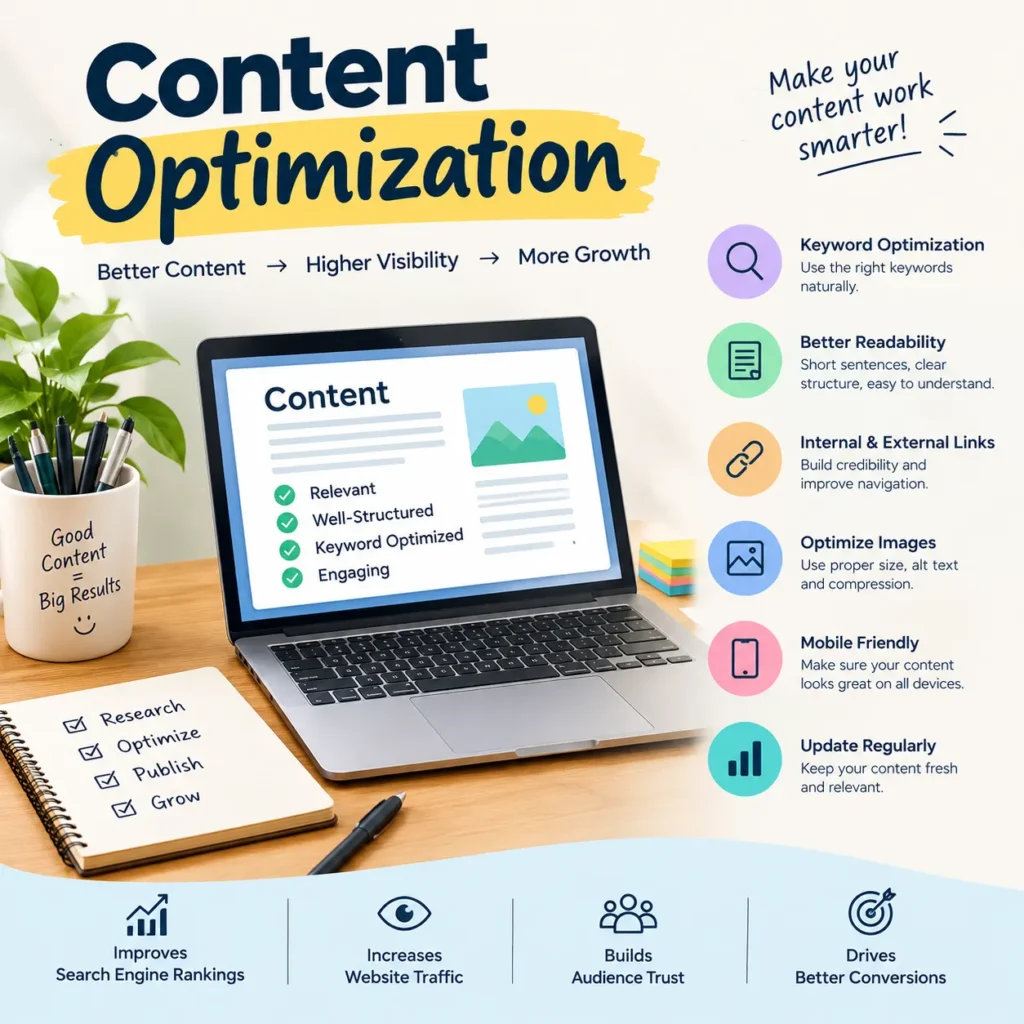
Content is an important part of SEO.
An SEO professional should know how to create and optimize content that satisfies the user’s search intent.
Good SEO content should:
- Answer the user’s question
- Provide useful information
- Use relevant keywords naturally
- Have clear headings
- Be easy to read
- Provide original value
- Encourage users to take the next step
Instead of writing content only for search engines, focus on creating content that genuinely helps people.
5. Off-Page SEO
Off-page SEO refers to activities performed outside your website to improve its authority, reputation, and visibility.
One of the most well-known off-page SEO techniques is link building.
Other activities may include:
- Digital PR
- Brand mentions
- Business listings
- Relevant citations
- Relationship-based outreach
- Guest contributions where appropriate
The goal should be to build genuine authority rather than simply collecting as many links as possible.
6. Link Building
Links from other websites can help search engines discover pages and can contribute to a website’s authority when they are relevant and trustworthy.
An SEO professional should understand:
- Internal links
- External links
- Backlinks
- Link relevance
- Anchor text
- Link quality
Always prioritize quality and relevance over quantity.
7. SEO Analytics
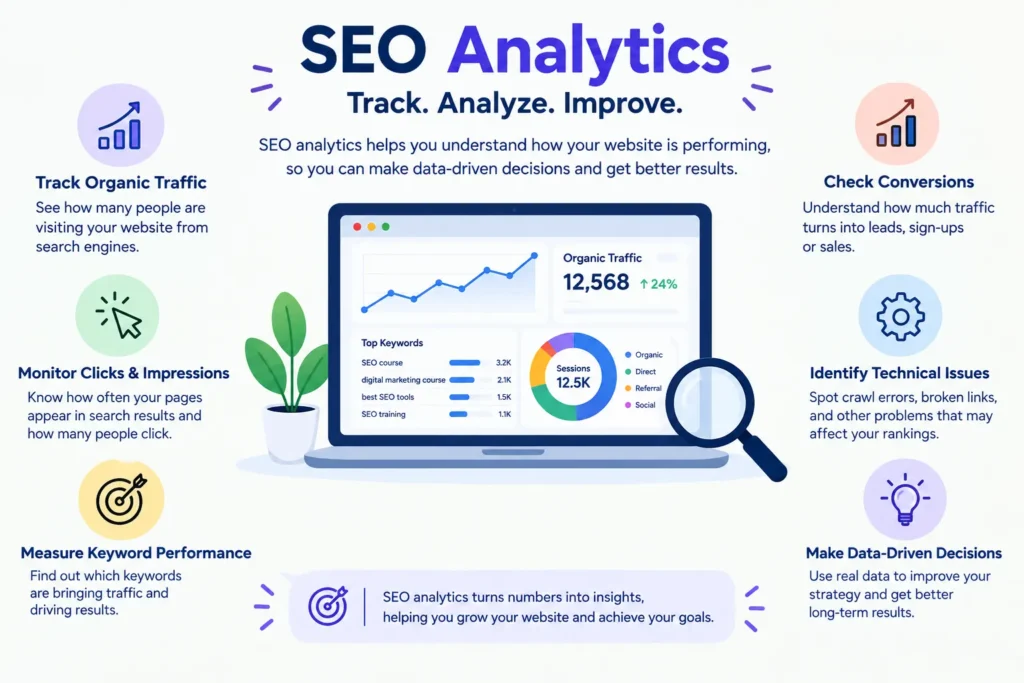
Knowing SEO techniques is not enough. You also need to understand whether your work is producing results.
SEO analytics involves monitoring metrics such as:
- Organic traffic
- Clicks
- Impressions
- Click-through rate
- Keyword visibility
- Conversions
- Engagement
- Indexed pages
Tools such as Google Search Console and Google Analytics can help SEO professionals analyze website performance.
8. Competitor Analysis
Competitor analysis helps you understand what other websites in your industry are doing.
You can analyze competitors’:
- Target keywords
- Content topics
- Website structure
- Backlink profiles
- Search visibility
- Content gaps
- Internal linking
The objective isn’t to copy competitors. Instead, identify opportunities where your website can provide something better or more useful.
9. Local SEO
If a business serves customers in a specific location, local SEO skills become very important.
For example, a business may target searches such as:
- Digital marketing agency in Delhi
- SEO services in Delhi
- Best salon near me
- Dental clinic in Noida
Local SEO involves areas such as business profiles, local citations, location-based content, reviews, and consistent business information.
10. SEO Reporting
An SEO professional should know how to communicate results clearly.
An SEO report may include:
- Work completed
- Organic traffic
- Keyword performance
- Search impressions
- Clicks
- Technical issues
- Backlink activity
- Conversions
- Recommendations
Good reporting helps businesses understand what has improved and what should be worked on next.
What Soft Skills Does an SEO Professional Need?
SEO is not only about technical knowledge. Soft skills are equally important.
Communication Skills
You may need to explain SEO strategies to clients, writers, developers, and business owners.
Analytical Thinking
SEO requires you to look at data, identify problems, and find possible solutions.
Problem-Solving Skills
When rankings or traffic decline, an SEO professional needs to investigate the reason and develop a suitable action plan.
Creativity
Creating useful content, finding new keyword opportunities, and developing link-building ideas requires creativity.
Learning Mindset
Search engines continuously evolve. An SEO professional should keep learning and adapting to industry changes.
What Tools Should an SEO Beginner Learn?
Learning the right tools can make your SEO work faster and more effective.
Some useful tools include:
| SEO Area | Useful Tools |
|---|---|
| Keyword Research | Google Keyword Planner, Semrush, Ahrefs |
| Performance Tracking | Google Search Console, Google Analytics |
| Technical SEO | Screaming Frog, PageSpeed Insights |
| Content | Google Trends, various content optimization tools |
| Competitor Research | Semrush, Ahrefs |
| Website Management | WordPress and basic HTML |
You don’t need to master every tool at once. Start with the fundamentals and gradually expand your toolkit.
How Can Beginners Learn SEO Skills?
If you are completely new to SEO, follow a step-by-step learning approach.
Step 1: Understand SEO Fundamentals
Learn:
- What is SEO?
- How search engines work
- Crawling
- Indexing
- Ranking
- Search intent
Step 2: Learn Keyword Research
Practice finding keywords for different businesses and understand their search intent.
Step 3: Learn On-Page SEO
Practice optimizing titles, descriptions, headings, URLs, content, images, and internal links.
Step 4: Learn Technical SEO
Understand crawling, indexing, sitemaps, robots.txt, website speed, mobile optimization, and basic technical issues.
Step 5: Learn Off-Page SEO
Understand backlinks, digital PR, citations, brand mentions, and ethical link-building strategies.
Step 6: Practice on a Real Website
Theory becomes much easier when you work on an actual website.
Try optimizing:
- Homepage
- Service pages
- Product pages
- Blog posts
- Location pages
Step 7: Analyze the Results
Use analytics and search data to understand what is working and what needs improvement.
How Long Does It Take to Learn SEO Skills?
The time required depends on your learning speed, practice, and previous digital marketing knowledge.
A beginner can start understanding basic SEO concepts within a few weeks, but becoming highly proficient requires continuous practical experience.
A simple learning path could be:
Month 1: SEO fundamentals + keyword research
Month 2: On-page SEO + content optimization
Month 3: Technical SEO + off-page SEO
Month 4: Analytics + reporting + real projects
The most important thing is not simply completing a course. Practice is what turns SEO knowledge into an actual skill.
SEO Skills for a Successful Career
SEO can be a valuable skill for people interested in digital marketing.
You can explore roles such as:
- SEO Executive
- SEO Specialist
- SEO Analyst
- Content SEO Specialist
- Technical SEO Specialist
- Local SEO Specialist
- SEO Consultant
- Digital Marketing Executive
With experience, you can also work with multiple businesses as a freelancer or consultant.
SEO Skills vs Digital Marketing Skills
SEO is one part of digital marketing.
Digital marketing can include:
- SEO
- Social media marketing
- Google Ads
- Email marketing
- Content marketing
- Affiliate marketing
- Online reputation management
Learning SEO first can give you a strong foundation, and you can gradually develop other digital marketing skills.
Frequently Asked Questions About SEO Skills
What are the most important SEO skills?
The most important SEO skills include keyword research, on-page SEO, technical SEO, content optimization, link building, competitor analysis, analytics, local SEO, and reporting.
Is SEO difficult to learn?
SEO can be learned by beginners. However, becoming good at SEO requires regular practice, experimentation, analysis, and continuous learning.
Do I need coding skills to learn SEO?
You don’t need advanced coding skills to start SEO. However, basic knowledge of HTML, CSS, JavaScript, and website structure can be helpful, especially when working with technical SEO.
Can I learn SEO without a digital marketing degree?
Yes. You can learn SEO without a formal digital marketing degree. Practical knowledge, projects, analytical ability, and experience are highly valuable.
Is SEO a good career skill?
Yes. SEO is a useful digital marketing skill for people who enjoy research, content, analytics, problem-solving, and working with websites.
Which SEO tools should beginners learn first?
Beginners can start with Google Search Console, Google Analytics, Google Keyword Planner, Google Trends, and PageSpeed Insights before moving to more advanced SEO platforms.
Final Thoughts
SEO is not a single skill. It is a combination of research, content, technical knowledge, analytics, creativity, and problem-solving.
If you want to become an SEO expert, don’t try to learn everything in one day. Start with the basics, practice on real websites, analyze your results, and keep improving.
Remember: SEO knowledge can get you started, but consistent practice can turn that knowledge into a professional skill.